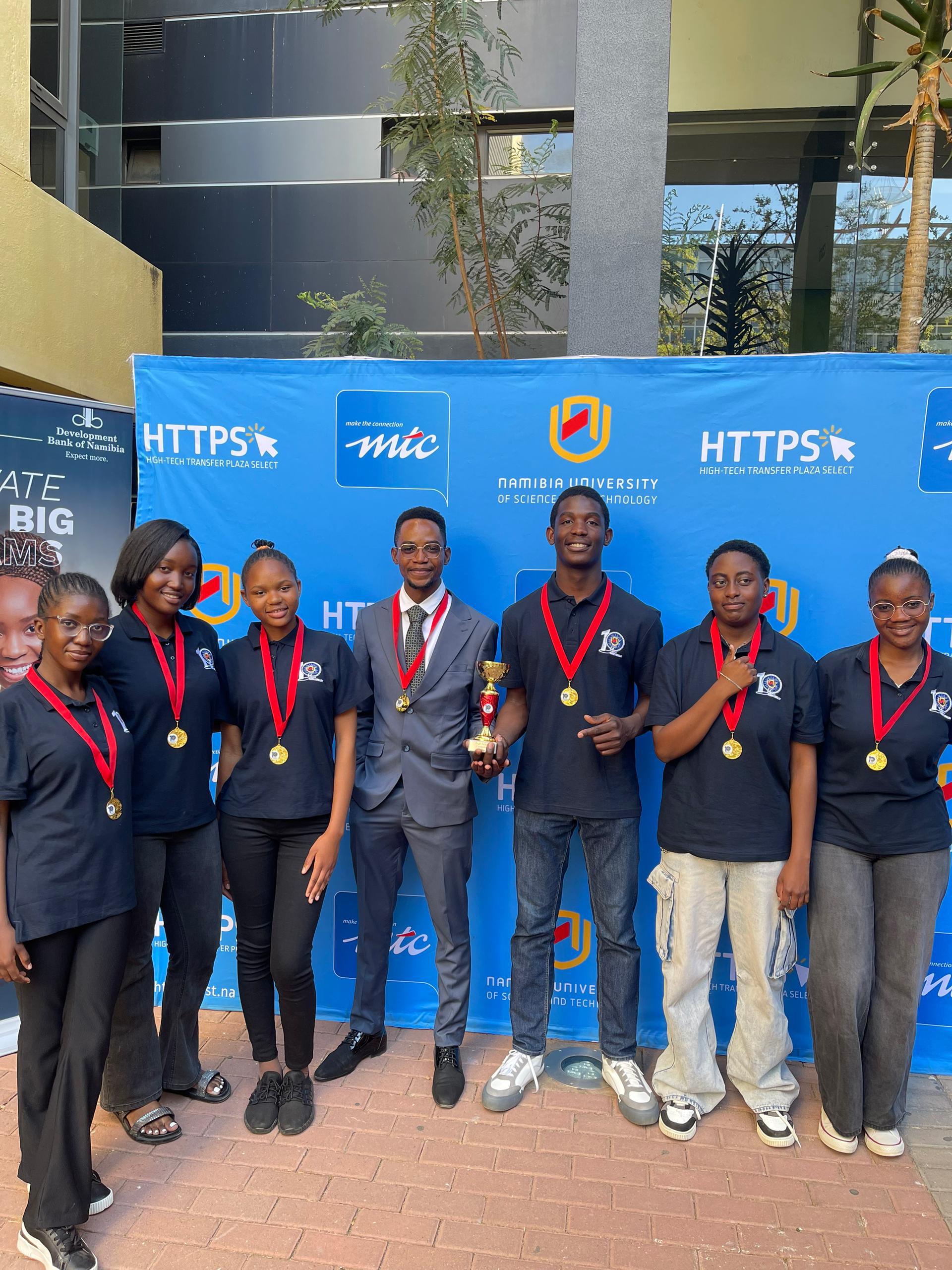
The Challenge and the Leap of Faith
At Windhoek Technical High School (HTS) in Namibia, we face a common challenge: we do not have a fully functional computer laboratory to teach programming to a group of students simultaneously. This presented a significant hurdle for the 12 Grade 12 AS Level learners I was preparing for the highly anticipated Namibia University of Science and Technology (NUST) Annual Programming Competition.
With only a single week remaining before the competition, I arranged for my learners to use the computer labs at NUST, dedicating time to learn Python from scratch. This was a race against time, but I was confident that Python’s famously clear syntax and beginner-friendly nature would give us a fighting chance.
Our Python Journey: From Colab to VS Code
We started our intense week of training using Google Colab as our primary Integrated Development Environment (IDE). Its browser-based accessibility and lightweight nature made it the perfect tool for our initial lessons on fundamental Python concepts.
Later that same week, we transitioned our practice to Visual Studio Code (VS Code) for hands-on sessions back at school. This shift allowed the learners to experience a professional coding environment, preparing them for the competition setting.
I was genuinely surprised and amazed by the speed at which the learners grasped the basic concepts of Python. They not only comprehended the material but quickly developed strong, logical problem-solving skills. The rapid adoption of concepts proved to me, once again, that Python is an ideal language for education and for fast-tracking technical skills.
The Competition and the Triumph
On competition day, the learners faced a multitude of complex programming challenges, all of which had to be solved within a strict time limit. They applied their newly acquired Python skills with impressive focus and teamwork.
The result? They successfully solved all of the given challenges!
Their determination, swift adaptability, and collective spirit led them to win the NUST Annual Programming Competition. This victory was more than a trophy; it was a powerful affirmation that a lack of resources cannot stop motivated learners who are equipped with the right tools—in this case, the versatile and powerful Python language.
This experience has profoundly reaffirmed my belief in Python as one of the most effective languages for introducing computer science in schools. More importantly, it has inspired my learners to pursue software development careers, demonstrating the life-changing impact of accessible programming education.